
Politics & Governance
How power, institutions and political ideas shape collective decisions.
Reading series: Power and public judgment →Begin with these essays

A Policy Pilot Needs Permission to End
Distinguish a genuine experiment from a temporary label on a program whose continuation is already politically assumed.

Outrage Can Occupy the Attention That Action Requires
Turn a political reaction into a specific question about evidence, responsibility and feasible participation.

Being Consulted Is Not the Same as Having the Decision Explained
Assess participation through scope, influence, feedback and reasons rather than the existence of a form or meeting.
A Political Promise Is Incomplete Without Its Tradeoffs
A political promise often begins with an outcome few people would oppose: safer streets, better schools, lower costs or stronger employment.

Why an Economic Headline May Not Describe Your Household
An economy can grow while a particular household struggles.
How Public Power Works: From Promises to Accountability
Follow a public decision through agenda setting, incentives, implementation and review, using an extended institutional example.

Political Power Is Also the Power to Define the Agenda
Power operates before a formal decision is made.

Trust Needs Institutions That Can Be Questioned
An institution asks people to rely on decisions they cannot personally observe in full.

How to Read a Political Claim Without Surrendering Your Judgment
A political message often combines an observation, an explanation and a proposed action in one sentence.
Political Power
How influence is acquired, maintained and challenged in collective life.
Institutions
The formal rules and organizations that structure public decisions.
Governance
Accountability, coordination and the mechanisms through which decisions are implemented.
Ideologies
The assumptions and values behind competing visions of social order.
Geopolitics
States, geography and strategic interests across international relationships.
 THE HUMAN CONTROL CODE
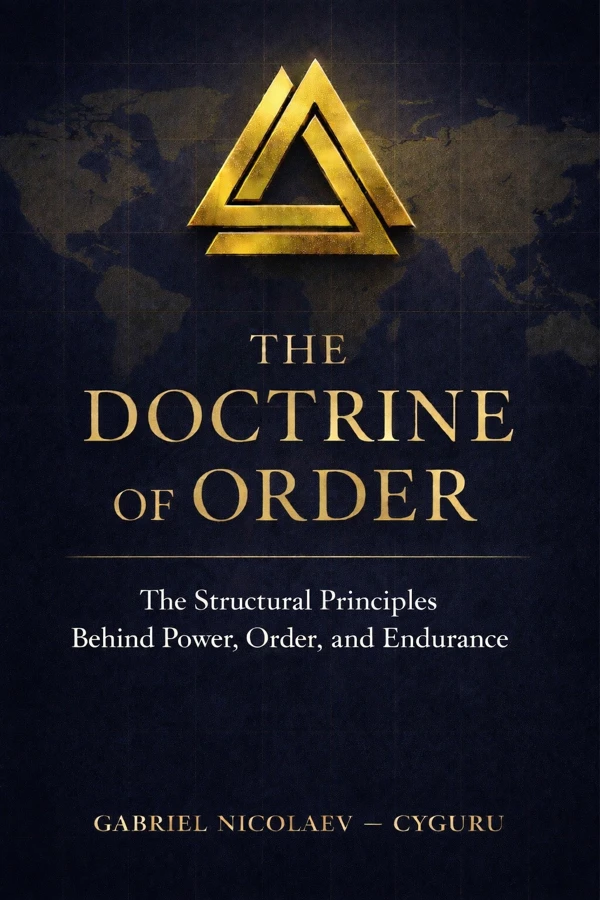 THE DOCTRINE OF ORDER
 CySociety