The observer is part of the decision
A market chart presents prices. The trader brings attention, expectations, fatigue and an emotional response to possible loss. These conditions can influence what is noticed, how uncertainty is interpreted and when an action feels necessary. The NSI perspective developed in CyGuru’s work directs attention toward this interaction between the person and the market.
That perspective should be understood with clear limits. A conceptual framework about trader state is not, by itself, an independently validated forecasting model. It does not establish that a feeling predicts the next move, that physiology can replace market evidence or that any particular indicator will produce reliable returns.
Related question: Borrowing a Trader’s Conviction Does Not Transfer Their Risk.
Observe without turning a feeling into a signal
Before evaluating an entry, note practical conditions: sleep, distraction, urgency to recover a loss and ability to explain the plan. These observations can help describe the decision environment. They should not be converted into medical diagnoses or claims that a particular bodily state makes a trade profitable.
A trader may feel calm and still misunderstand risk. Another may feel nervous while correctly following a tested process. The useful question is how personal state affects adherence, interpretation and discretion, not whether emotional comfort proves that the market agrees with you.
Keep two records that can be compared
One record concerns the market hypothesis: the conditions observed, the reason for the position and the criteria for exit. The other concerns the trader’s behavior: deviations, interruptions, impulsive changes and reasons given at the time. Comparing them can reveal whether a recurring problem belongs to the strategy, its execution or both.
Review also the trades you avoided and the observations that failed to support your expectations. A framework becomes difficult to learn from when every result can be interpreted as confirmation. Specify what evidence would challenge a conclusion and preserve cases that complicate the preferred explanation.
Related question: You Do Not Owe the Market an Order.
Build a responsible use case
The NSI lens can serve as a structured reflection tool within trading education. Its value must be assessed through transparent definitions and records rather than persuasive language about neuroscience. If a technical indicator or signal service makes performance claims, those claims require their own methodology, complete results and appropriate evaluation.
The broader principle is straightforward: market analysis and self-observation answer different questions. One concerns a trading proposition; the other concerns the conditions under which a person acts on it. Neither removes uncertainty. Used carefully, they can make the decision process easier to inspect without turning a human-state narrative into a promise about future prices.
Perspective & further context
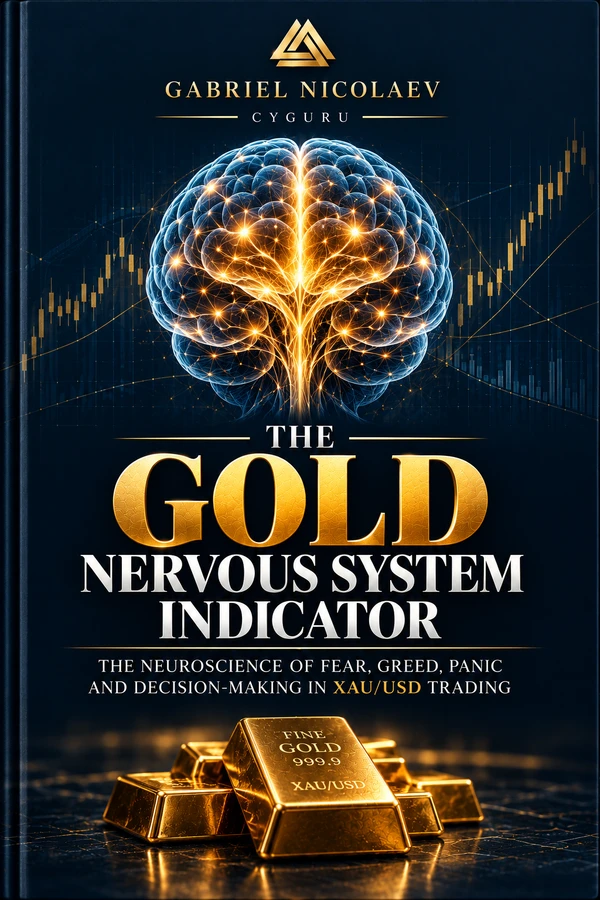
This is a CyGuru editorial essay: an interpretive framework for examining decisions. The related book develops the author’s perspective; it is not independent evidence for every claim.
Explore more in Trading & Markets or follow its reading series. Browse every essay.