A convincing explanation is only the beginning
A health claim often arrives with a satisfying story. A hidden imbalance explains many symptoms. An unfamiliar substance promises to restore what modern life has removed. A dramatic personal account supplies emotional force. The explanation may contain a reasonable question, but its coherence does not establish whether the proposed intervention works or whether it is appropriate for a particular person.
Begin by writing the actual claim in a form that could be investigated. “Supports balance” is difficult to assess. “Reduces the frequency of this symptom in adults with this diagnosed condition” is more specific. Ask what outcome was measured, in whom, over what period and compared with what. Precision makes a claim more accountable without requiring you to dismiss every unfamiliar idea.
Related question: Why a Health Journal Can Be More Useful Than Another Theory.
Follow the evidence past the headline
Imagine a hypothetical product described as “supported by cellular research.” That may mean an experiment in isolated cells, not a trial of the sold product in people. A mechanism can justify further investigation while leaving effectiveness, dose, interactions and safety unresolved. The distance between the experiment and the advertised conclusion belongs in the assessment.
NCCIH's resources on evaluating online health information direct readers toward questions about sources and the distinction between information and advertising. Apply that distinction to the whole chain. Does the page identify the underlying study? Does the study examine the same formulation and outcome? Does a testimonial stand in for a comparison group? A reference list can create an impression of rigor while leaving the central claim unsupported.
Inspect the seller's role and the cost of being wrong
A commercial interest does not automatically make a claim false. It does make the relationship relevant. Look for who pays, who benefits and whether independent work reaches similar conclusions. Be especially cautious when a single explanation is used to justify an expanding list of products or when disagreement is treated as evidence that the truth is being suppressed.
Risk includes more than the purchase price. Consider unwanted effects, interactions, delayed assessment and the possibility of stopping established care. A product presented as natural can still cause harm. Before changing treatment or combining substances, discuss the actual ingredients and intended use with an appropriately qualified clinician or pharmacist. Bring the label and the source, not only the marketing summary.
Related question: A Wearable Score Is an Estimate, Not an Instruction About Your Day.
Keep curiosity compatible with uncertainty
A useful conclusion may be “interesting, but not established,” or “evidence exists for one use, not for this broader promise.” You do not have to choose between complete endorsement and contempt. Different claims within the same book, product page or theory can deserve different judgments. State what evidence would change yours.
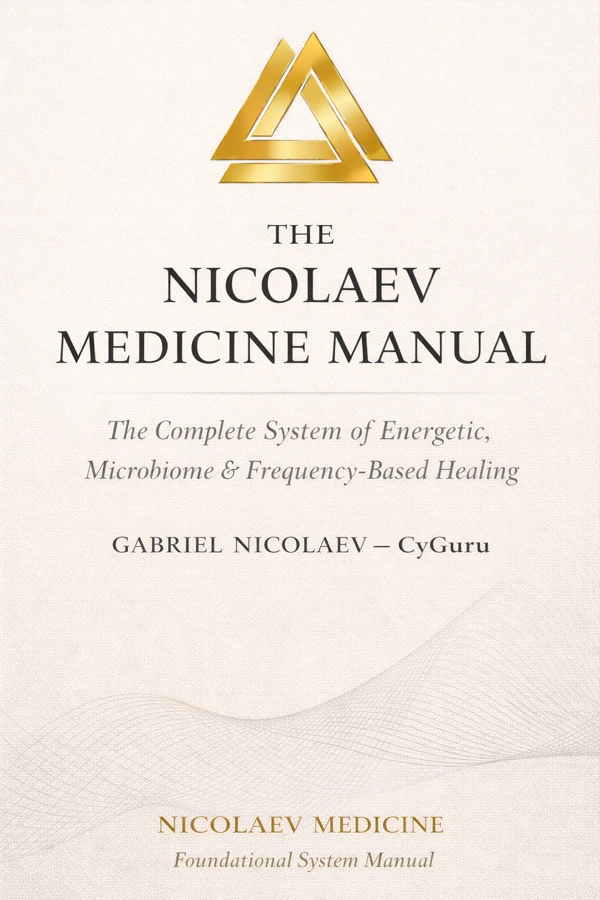
In this library, Nicolaev Medicine is the author's interpretive framework, not an established clinical specialty. Books and exploratory theories can suggest questions; they cannot independently validate their own health claims. The CyGuru principle worth preserving is active inquiry: make assumptions visible and accept that some questions remain unresolved. Your willingness to examine an idea should remain separate from your willingness to ingest, purchase or recommend it.
Perspective & further context
This is a CyGuru editorial essay: an interpretive framework for examining decisions. The related book develops the author’s perspective; it is not independent evidence for every claim.
The following primary sources provide background on the relevant subject. They do not validate the CyGuru framework as a whole.
NCCIH: Finding and evaluating online health resources ↗Nicolaev Medicine is presented as the author’s perspective, not an established clinical specialty. This article does not diagnose or prescribe treatment.
Explore more in Health & Nicolaev Medicine or follow its reading series. Browse every essay.