A complex subject attracts simple promises
The microbiome is often presented as though one product, one organism or one test could reveal the answer to every digestive problem. That story is attractive because it turns an intricate biological system into a purchase. But microbial communities interact with diet, medication, host biology and many other conditions. An ecosystem cannot be understood simply by declaring some microbes good and others bad.
The term microbiome concerns microbial communities and their environment; popular discussions often narrow it to gut bacteria. Even within that narrower focus, individual variation is substantial. A finding associated with a condition does not automatically establish a cause, and an observed change does not by itself prove a clinical benefit.
Related question: Food Decisions Begin Before You Feel Hungry.
Separate a mechanism from an outcome
Research can investigate how diet influences microbial activity without proving that a particular diet treats a particular disease. The distinction matters. A controlled feeding study summarized by NIDDK examined changes in gut microbial characteristics and energy balance. Its findings invite further investigation; they do not justify a universal prescription or a claim that all symptoms begin in the gut.
This is especially important when marketing borrows a scientific word and removes the conditions attached to it. Ask which participants were studied, what changed, how long the study lasted and whether the outcome was a symptom, a laboratory measurement or an established health endpoint. The strength of a claim depends on the evidence behind that particular claim.
Build a practical foundation
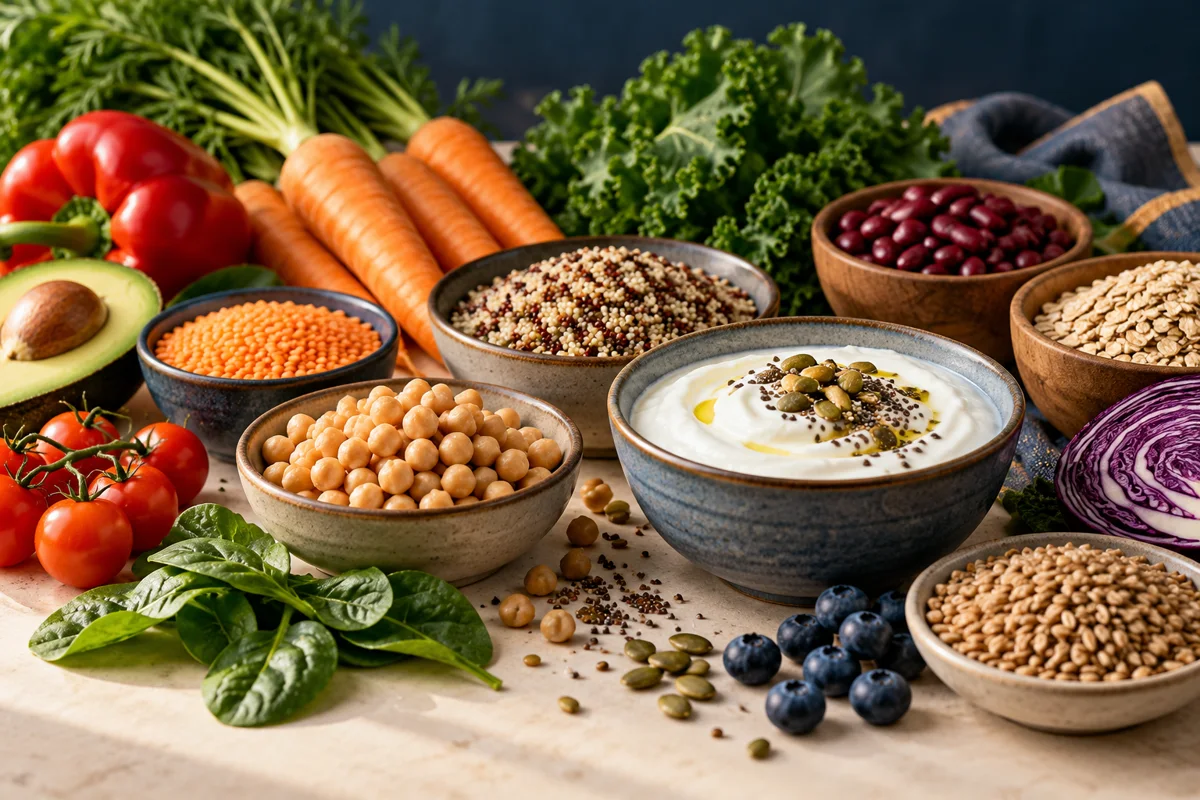
For everyday eating, variety and nutritional adequacy generally provide a more useful starting point than trying to engineer a perfect microbial profile. Foods such as vegetables, legumes and whole grains can contribute dietary fiber, but individual tolerance and clinical circumstances matter. A person with ongoing symptoms may need tailored assessment rather than an increasingly restrictive collection of self-imposed rules.
Probiotics also deserve specificity. Evidence for one strain, dose and use cannot simply be transferred to every product bearing the same broad label. “Contains probiotics” is not a complete explanation of benefit, and a supplement should not become a substitute for investigating persistent symptoms.
Related question: Before You Believe a Health Claim, Follow the Evidence.
Keep curiosity attached to proportion
A useful approach combines interest in emerging research with restraint about personal conclusions. Record relevant symptoms, dietary changes and medicines, then discuss persistent concerns with an appropriately qualified professional. Seek timely care for alarming symptoms such as unexplained weight loss or gastrointestinal bleeding.
The microbiome is an important field precisely because it is complex. Respecting that complexity does not make the subject inaccessible. It makes the questions better: what does the evidence actually show, for whom, under what conditions, and how much of the proposed solution remains an assumption?
Perspective & further context
This is a CyGuru editorial essay: an interpretive framework for examining decisions. The related book develops the author’s perspective; it is not independent evidence for every claim.
The following primary sources provide background on the relevant subject. They do not validate the CyGuru framework as a whole.
WHO: Healthy diet ↗NIDDK: Diet and the gut microbiome ↗NIH: Probiotics — evidence and limitations ↗Nicolaev Medicine is presented as the author’s perspective, not an established clinical specialty. This article does not diagnose or prescribe treatment.
Explore more in Health & Nicolaev Medicine or follow its reading series. Browse every essay.